Edible Packaging as a Twist for Shipping Food 

Did you know that you can make your packaging edible. These days, more food businesses are able to do this, with edible packaging being all the rage. It’s made with edible materials such as sugar, seaweed, and much more.  

Here, we’ll discuss how edible packaging, including seaweed, rice, and sugar, all helps to make the packaging experience even better. You’d be surprised at all of the different ways to make edible packaging work.

What is It? 

It’s literally packaging that you can eat. It means that you’re not only enjoying the product, but what covers it. 

This includes rice paper, seaweed, and even sugar coverings. It’s safe to eat, and also makes it a two-for-one experience. You get to have some food in a packaging that offers a stronger peace of mind.

Who uses This 

Many types of industries do. 

Single-food containers benefit from this, since you can just eat the product after all of that. 

Small product wrappers may use this kind of packaging. Seaweed for rice balls or sushi is common in a lot of new food packaging areas.

Travel snacks are another. By having this, you can get the edible packaging that you deserve, without having to worry about being a product waster or creating other problems. 

The challenges 

It all seems like a great idea, but there are some considerations.

The first is edibility and consumer acceptance. Many people are cool with snacks, but not with eating the wrapper associated with said snack. Because of this, there are a lot of people who are against the idea of these snacks. The goal is to make it edible enough that you will make it acceptable for people.

The second is hygiene. You don’t want to have customer’s hands and grubby fingers all over this. it spreads germs, and it can be gross.   That means, you may want to use this with single-serve products. More takeout places use this type of packaging since it is a singular customer item, and therefore will only be touched by the one who prepares the food and the customer. 

The Benefits 

Obviously, it does need to be massaged a bit and perfected, but if more industries use this, it eliminates the need for single-use plastics in food shipping. Even if the customer doesn’t directly eat it, using a plant-based edible outer covering is good. if you toss it, it’ll degrade. Overall, you want to focus on the difference that this type of packaging will have, and how it will eliminate the need for single-use plastics across many shipping industries. 

When you use less plastic, you’ll be able to help create a more accessible experience, and also reduce the carbon footprint.  Many customers do look at that, so it’s something worth doing if the ultimate goal is to be more eco friendly with your decisions.

The future potential is endless 

The cool thing about this, is you can expand it to other types of industries that would benefit from this type of product.

One example is cosmetics. Obviously you can’t just eat lip gloss, but if you’re someone who is looking to make the packaging sustainable, it might be an option.

Another is supplements. Many would be thrilled to have a medium to eat the supplements they take. This edible packaging proves to offer just that.

Again, there’s a lot of unique applications for this, and ideas that are constantly expanding. Being attuned to the different expansions opens the door to broader potential, and revolutionizes the industries, giving you more packaging that will really shine too. 

How Candy Boxes Turn Simple Sweets Into Something Special

Walk into any candy shop, bakery, or specialty store, and you’ll notice something quickly: the packaging is doing just as much work as the treats themselves. Candy boxes, even the simplest ones, turn ordinary sweets into something people want to pick up, hold, and bring home. They make the product feel like a gift—even when someone buys it for themselves. That’s why candy boxes remain one of the most reliable tools for boosting presentation and sales.

The magic of candy boxes starts with emotion. Candy already carries a sense of nostalgia, celebration, and comfort. When it’s placed inside a neatly folded box with clean lines and a fitted lid, that feeling multiplies. Customers don’t just see chocolate or caramel; they see a moment they can give to someone or enjoy themselves. A box elevates the experience before the first bite ever happens.

But the value of candy boxes doesn’t stop at visual appeal—they play a crucial role in protection too. Fragile sweets can smudge, melt, or break easily. Without proper packaging, even the most beautiful treats lose their shape before they ever reach the display or the customer’s hands. Candy boxes solve this. Their structure keeps delicate pieces from shifting. The lid shields them from dust and humidity. The stackable design prevents accidental crushing during transport or storage.

For small shops and large retailers alike, candy boxes bring efficiency. Workers can pack trays or individual pieces quickly without fussing with wrapping materials that slow things down. When the box holds its shape and closes cleanly, the packing process becomes smooth and predictable. During busy seasons—Valentine’s Day, Easter, Christmas—this speed keeps lines moving and customers happy.

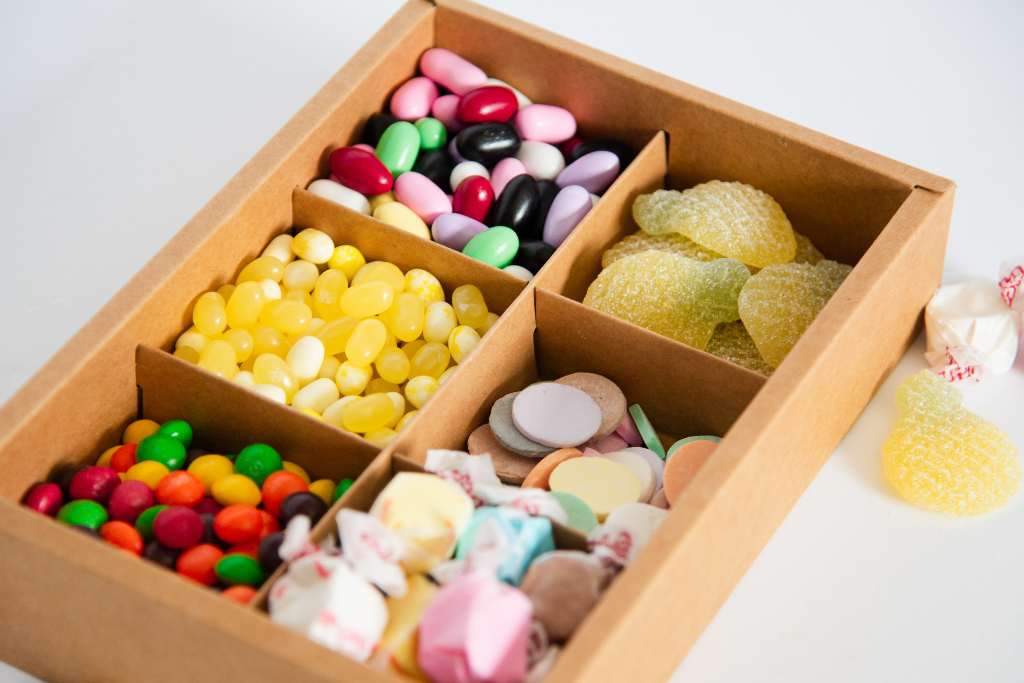
Presentation inside the box also matters. When candies sit in neat rows, separated by liners or nestled into small compartments, the entire product looks more premium. Customers notice organization. They feel reassured that the shop handles its sweets with care. Even a simple kraft box becomes elegant when the interior is arranged thoughtfully.

Candy boxes also help businesses manage inventory. Instead of weighing loose chocolates or counting scattered pieces, shops rely on boxes that hold predictable quantities: a half-dozen truffles here, a dozen caramels there. This consistency keeps production steady and makes restocking predictable. When everything fits the same way each time, the workflow becomes smoother.

Branding is another strength of candy boxes. A business doesn’t need fully custom printing to make an impact. Stickers, stamped logos, ribbons, and tags all turn a plain box into something memorable. Even the color of the box—white for clean elegance, kraft for natural warmth, red for festive cheer—communicates something about the brand. Customers often keep candy boxes to reuse, which extends the shop’s presence long after the last piece is eaten.

Visibility options matter too. Some stores prefer closed boxes for a sense of surprise. Others choose clear window boxes so customers can peek inside without opening anything. This small detail often increases sales, especially for eye-catching sweets like dipped strawberries or decorated chocolates.

Candy boxes also shine outside of retail environments. Home bakers use them for gifts and special occasions. Wedding planners rely on them for favors. Corporate events use them for branded treats. The box becomes part of the memory—something guests take home as a small, sweet reminder of the event.

What makes candy boxes truly special is their ability to transform the familiar. Candy is something everyone knows, but a candy box turns it into something worth sharing, gifting, and celebrating. It elevates the product, strengthens the brand, and makes every treat feel like an experience instead of just a snack.

Candy boxes may be small, but their impact is big. They protect, present, and elevate sweets in a way few other packaging tools can match.

Floating Packaging for Flood-Prone Areas 

Some areas are prone to flooding. Some are still attempting to recover after natural disasters, such as North Carolina and other locations.

This is a challenge for a lot of shipping companies, because waterlogged and flood-prone regions require specific packaging that will keep the items safe and protected from all sorts of damage, including water damage.

Here, we’ll go over the way to make packaging float, through the use of floating or packaging. 

The Designs for Floating Packaging 

Floating packaging needs to be  buoyant, and easy to float.  This isn’t just something lightweight though. it’s something that’s protective of your favorite items, especially if they go to certain areas. 

You want to make sure that the packaging is waterproof, so that when the item does get to these areas, it doesn’t break down.   make sure as well that there is packaging to encase the item inside.   Using waterproof outside packaging and varnishes that reduce the presence of water is good, but adding the protection inside is also good for protection of all the items that are inside.

What you want to do is make it so that it’s waterproof, but also something that you will as well make exciting for all customers, and really enhances the experience. 

The applications 

The best way to incorporate floating packaging into your packaging designs is through looking at how it fits the product. Not every type of item will need this.

If you’re shipping out emergency supplies, you need waterproof packaging and floating packaging that will be able to withstand the flooding or other damage of the area.   

Electronics is another. Shipping out to sensitive areas where it’s prone to flooding can impact the integrity of these electronics.   Making sure that you keep this in mind prevents more issues down the line, and overall protects the items.

Finally, there’s perishables. Floodwaters contain some nasty microorganisms, resulting in sickness and other problems. If you’re not careful, it can get in the food, and spoil the items inside.   Adding in floating packaging for perishables is important, because you’ll be able to protect the item, and keep it nice and fresh.

The Challenges of Floating Packaging 

Floating packaging is great, but that doesn’t mean it’s always the easiest to put together. Your biggest challenge is to make it durable.   They’re going to withstand floodwaters and other damage. You need to make it strong enough that the water won’t seep inside, and further damage this.

The second challenge is the cost factors.   The costs of these do, over time, increase. It might be too much, especially for small businesses. Making sure that you can shoulder said costs is important for packaging success.

Finally, the eco friendliness of the item. A lot of times this type of packaging uses plastic, which isn’t sustainable. Making sure that it’s eco friendly and safe for customers to use is so important. Designing it with materials that aren’t too hard on the planet is a big part. 

New Improvements 

There are improvements to this packaging happening over time. 

Some companies are making this type of packaging that doubles as a temporary raft, or a floatation aid. This is good for natural disaster locations, as it might not be possible to get to safety. Again, with all of these new updates, there’s a lot of possibilities, and other unique aspects.

Floating packaging is good for shipping to sensitive locations and areas. This solution makes it possible for flood-prone areas to make it possible, and also to develop new ways to help people displaced by these disasters get the help they need. 

Seasonal Packaging and Shipping 

The winter and summer seasons are times of great change, both temperatures and weather patterns. Storms, both snow and rain, can be quite a problem to deal with, especially with packaging.

Seasonal changes do impact packaging. It can make seals far less, impacting the overall durability and functionality of this packaging. Yes, it could change your packaging from the strongest out there, to flimsy and weak. We don’t want that, so taking the time to craft seasonal packaging that stands out, and really creates an impact is important.

Here, we’ll go over seasonal packaging and shipping solutions for you to consider. 

The Weather-Specific Innovations 

With all of these new packaging experiences, there are also new innovations that will change the way things are, especially the stability of your packaging.

Heat-resistant packaging nis especially useful for the summer seasons, as they keep the heat away from delicate items, and so that the packaging doesn’t sweat. 

For those stormy and wet locales, moisture-proof films and solutions are common. Putting it over the box or packaging receptor prevents it from getting affected by the water, especially if you’re in a particularly wet area. 

For those chilly and cold climates, or during the winter, insulated boxes are a solution. It can be used to protect the item that’s inside, and also keep it nice and warm. Perfect for those moments where you need to keep your packaging nice and cozied up. 

Yes, all of these packaging initiatives are great. More and more industries are adapting this. in the world of perishable goods such as Hello Fresh, ice packs and other cooling packaging is used to help keep the items fresh for consumption.   Computer and electronic companies have made boxes that keep the technologies cool, so that the items don’t get burnt.

There are also pharmaceutical companies that manufacture medicines. They’ve integrated packaging that keeps the items cool and at the correct temperature until it gets to the customers. 

The Challenges of Implementation 

This is a great thing to add to packaging experiences, but it does come with the downside of it being costly to implement.   It does cost a lot to add these boxes and sensors. Being able to implement them in a manner that’s smart, safe, and friendly for everyone is very important.

The second issue is supply chain disruptions due to material changes.   The materials used for this packaging do require specific materials, and sometimes if there is a shortage, it can be a problem.   If you’re going for eco-friendly initiatives, this is especially an issue. In this case, you need to be mindful of what you need, and also try to make sure that if there are changes, that you’re prepared. Overall though, this type of packaging does a lot, and as a business, you’ll be glad that you have it. 

Future Insights 

There’s a lot of future insights to be had with this packaging.

The first is AI-driven packaging that adjusts in a dynamic manner to the weather conditions which are there. This is especially important for very sensitive items, such as medical and food packaging.   Getting foods and items that can be adjusted is important. With AI technology, it can change on a whim, and really make this work.

With more and more packaging ins=centimes to be had, and more possibilities that rise, you’ll be grateful for the changes in your packaging. It will keep everything safe and fresh, and through these changes, customers will be happier than ever before with the items that they get from you, resulting in a repeated buyer experience too. 

Tear-Free Packaging to Reduce Packaging Frustration 

One problem that many have is they’ll get packages, only to discover they’re hard to open, complicated, and well, frustrating to deal with. Many customers want something that they can open up, without too much trouble.

Here, we’ll talk about the problem with over-complicated packaging, and how by reducing the frustration, it will improve the overall experience for everyone involved. 

Hard to Open Packages are  a problem in accessibility 

With packages that are hard to open, you’re alienating a subset of your customers  since if it’s too complicated to open, they won’t want to buy it.

Accessibility is really important these days. Obviously, you want good security when creating and shipping out packages, but you also want it to be easy enough that even the average person can open it.

Over-complicated packages might seem like a good idea at the time, but when you make it so hard that the average person can’t get it open without using scissors or a knife, that’s a problem. Not to mention, if they have to do that, it does put them at risk for injury.

Overall, it’s a big problem, but if you make the packaging easy to open, not too complicated, and reflects your brand and personality, people will love it. 

Ways to Make Packaging Easier to open 

The best way to do this, is to not overwrap your packaging in a bunch of tape. That’s a recipe for disaster. If you have to do that, consider changing the box and getting one that will accommodate the packaging so that it’s safe and secure. 

Corrugated cardboard boxes are one of your best options for easy to open packaging that really shines.

necessities for productive frustion free packaging

Another thing to consider, is guided edges that help the customer tear open packages. It might seem too simple, but if you think about it, it’s pretty easy to work with. The guided edges give customers something to follow.

For poly bags, you can add a perforated area for them to open up. 

Finally, also consider the tape that you use. Plastic tape is a bit cumbersome to work in, and it can be a huge problem for many businesses. A solution to this is water-activated tape.   It is tamper-evident, and also works well with opening. Overall, you want to make the packaging simple to open, without sacrificing the branding or the identity of such.

How to Create Intuitive Designs 

Intuitive designs for this kind of packaging require you to think outside the box, no pun intended.   Look at your current packaging and see if there are ways that you can adjust the packaging so that it’s easier to open.

If you have a certain audience, consider asking them about this. Many times, the feedback from customers is what will impact your packaging, and make it useful for you.

Overall, if you improve the packaging to make it easier for everyone, it builds a more inclusive experience. While at first making packing easier to open seems like a small thing, with time, it can grow to become something more profundo and impactful, and better for your business as well. 

So, if you’re not sure on whether or not your packaging is making an impact, consider how other people open it. if you’re giving them something that they can utilize, and something that will help with engagement of customers, then you’re doing something great. Making things accessible and inclusive should be the goal of packaging, and something to consider if you want to really heighten the overall experience for every customer that buys from your company as well.